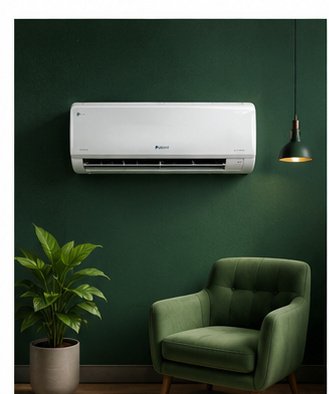
Improving Indoor Air Quality with Smart Ventilation

Modern healthcare and pharmaceutical facilities depend on clean, controlled environments. Good ventilation supports comfort, productivity, hygiene and consistent indoor conditions, especially in laboratories, offices and manufacturing spaces.
The connection between air quality and efficiency
Indoor air quality can affect both people and processes. Smart ventilation systems use sensors, controls and intelligent air movement to maintain better conditions while reducing unnecessary energy consumption.
By adjusting airflow based on occupancy, temperature and environmental conditions, a facility can maintain a comfortable atmosphere without relying on one fixed operating level throughout the day.
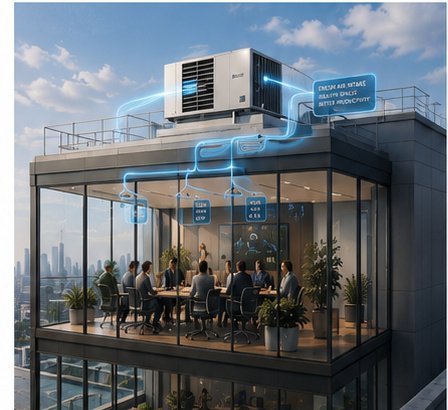
Is smart sensing actually worth the investment?
Smart sensing can improve how ventilation reacts to real-world conditions. Sensors can identify changes in occupancy, temperature or indoor air parameters and allow systems to respond more precisely.
Can you improve air quality without replacing the whole system?
In many cases, improvements can be made through better controls, filtration, airflow balancing and monitoring. Existing systems can often be optimized before a full replacement is considered.
Optimizing commercial ventilation systems for the Indian climate
Hot and humid conditions can place extra demand on indoor climate systems. Efficient ventilation design should consider heat, humidity, filtration, fresh-air requirements and energy performance together rather than treating them as separate concerns.
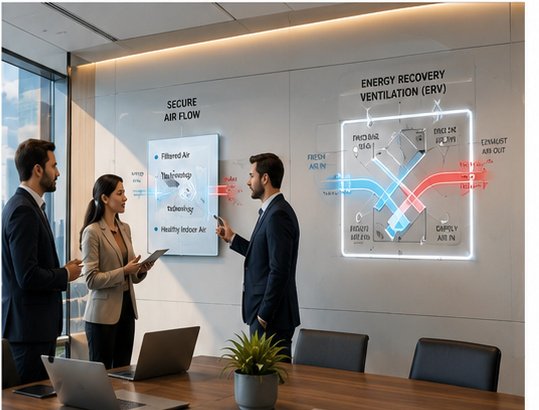
Do I need UVGI or ionizers in my ducts?
Additional air-treatment technologies may be useful in specific applications, but they should be considered as part of a wider indoor-air strategy. Proper ventilation, filtration, maintenance and monitoring remain essential.
How do I handle “dead zones” in large open offices?
Large spaces can develop areas where airflow is weak or uneven. Air balancing, diffuser placement, zoning and sensor-based monitoring can help identify and improve these areas.
Frequently asked questions
Filter replacement depends on system usage, environment and manufacturer recommendations. Regular inspection is recommended.
CO2 levels are commonly used as one indicator of ventilation effectiveness. Facility requirements should determine the target range.
Smart controls can reduce unnecessary operation by matching airflow more closely to actual demand.
Yes. Better zoning, monitoring and airflow control can help create more consistent conditions across occupied areas.